
WATERPROOFING SOLUTIONS
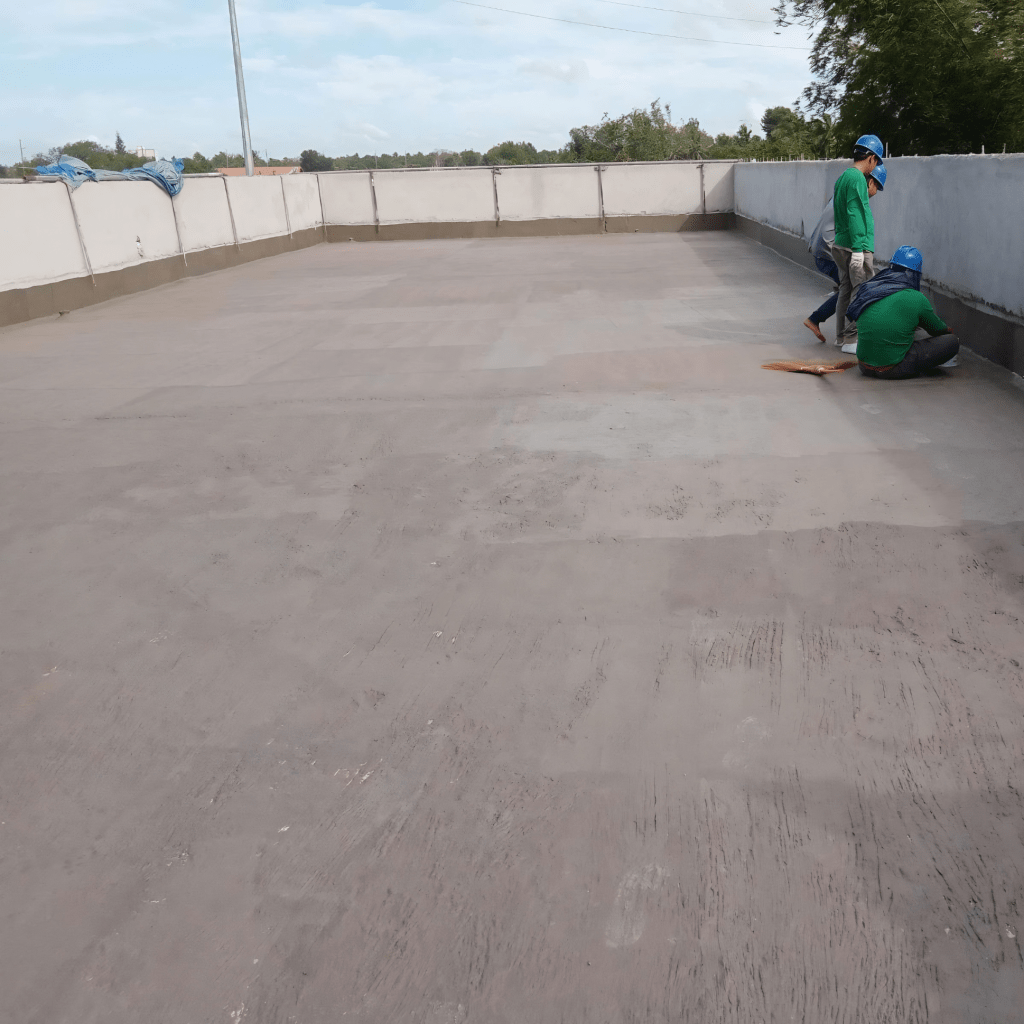
One of the most essential investments in protecting any building or structure. Without proper waterproofing, water can penetrate walls, roofs, decks, basements, and foundations, leading to costly damage over time.
Professional waterproofing solutions create a protective barrier that prevents water from entering vulnerable areas of a structure. By keeping moisture out, waterproofing helps extend the lifespan of buildings, reduce maintenance costs, and protect occupants from health risks associated with mold and damp environments.
Our Waterproofing Systems
Polyurethane Waterproofing System
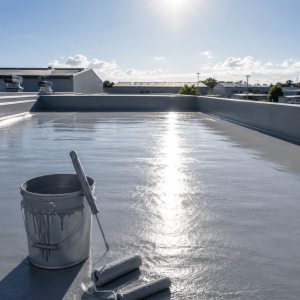
A liquid-applied waterproofing system that forms a seamless, highly flexible, and durable membrane after curing. It is designed to bridge cracks, accommodate structural movement, and provide excellent resistance against water penetration, UV exposure, and weathering. Due to its flexibility and strong adhesion to various substrates, polyurethane waterproofing is widely used on roofs, balconies, terraces, podium decks, gutters, and exposed concrete surfaces. It is commonly applied in residential buildings, commercial developments, industrial facilities, parking structures, and infrastructure projects where long-term waterproofing performance is required.
Benefits
- Seamless and joint-free membrane
- Excellent crack-bridging capabilities
- High flexibility and elongation
- Strong adhesion to concrete, metal, and other substrates
- Resistant to UV rays and weather exposure
- Long service life with minimal maintenance
- Suitable for complex surface geometries
Cementitious Waterproofing
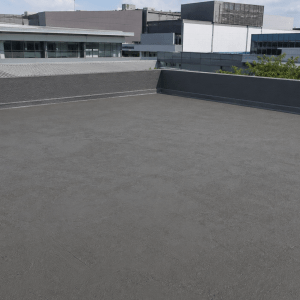
A cement-based coating system formulated with specialized additives that enhance water resistance. It is one of the most commonly used waterproofing methods due to its ease of application and compatibility with concrete and masonry surfaces. This system is ideal for internal and external wet areas such as bathrooms, kitchens, water tanks, swimming pools, basements, retaining walls, and elevator pits. It is extensively utilized in residential, commercial, institutional, and water-treatment facilities.
Benefits
- Easy to mix and apply
- Excellent adhesion to concrete and masonry
- Cost-effective waterproofing solution
- Suitable for potable water structures
- Durable against moisture and water pressure
- Low maintenance requirements
- Ideal for wet-area applications
Elastomeric Waterproofing
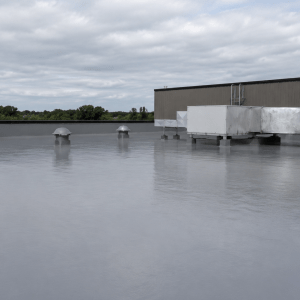
A highly flexible coating system designed to stretch and recover without cracking. It creates a protective membrane that can withstand thermal expansion, contraction, and minor structural movements while maintaining watertight integrity. Commonly used on roofs, exterior walls, parapets, balconies, and facades, elastomeric waterproofing provides both waterproofing and protective coating functions. It is widely adopted in residential developments, commercial buildings, schools, hospitals, warehouses, and industrial facilities.
Benefits
- Exceptional flexibility and elasticity
- Effective crack-bridging performance
- Protects against rain and moisture penetration
- Helps extend the lifespan of building exteriors
- Enhances aesthetic appearance with protective coating options
- Reduces maintenance and repair costs
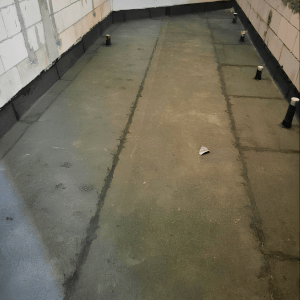
Torch-On Membrane Waterproofing
A bitumen-based sheet membrane system installed using heat to bond the membrane securely to the substrate. The membrane forms a robust waterproof barrier that is highly resistant to water ingress and environmental exposure. It is commonly used for flat roofs, roof decks, basements, foundations, retaining walls, podium slabs, and underground structures. This waterproofing method is popular in commercial buildings, industrial facilities, warehouses, shopping centers, and infrastructure projects where durability and long-term protection are critical.
Benefits
- Highly durable and long-lasting
- Excellent resistance to standing water
- Strong puncture and tear resistance
- Suitable for large surface areas
- Performs well under heavy weather conditions
- Provides reliable waterproofing for below-grade structures
- Low maintenance when properly installed
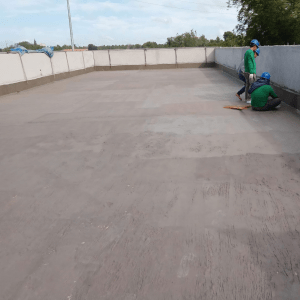
Flexible Cementitious Waterproofing
Combines cement-based materials with polymer modifiers to create a waterproof membrane that is both durable and flexible. Unlike traditional cementitious coatings, it can accommodate minor structural movement and hairline cracks while maintaining waterproof integrity. It is widely used for balconies, bathrooms, swimming pools, water tanks, basements, retaining walls, concrete roofs, and wet areas exposed to varying moisture conditions. This system is frequently specified in residential, commercial, industrial, and infrastructure construction projects.
Benefits
- Combines strength and flexibility
- Bridges hairline cracks effectively
- Excellent adhesion to concrete and masonry
- Suitable for positive and negative water pressure
- Resistant to moisture and weathering
- Easy application and repair
- Long-term protection for concrete structures
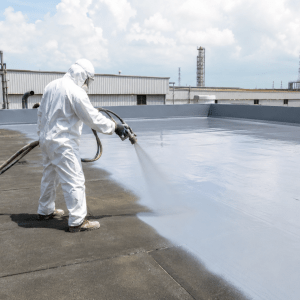
Polyurea Waterproofing
Advanced spray-applied waterproofing technology that forms an extremely tough, seamless, and highly elastic membrane within seconds of application. It offers superior chemical resistance, abrasion resistance, and waterproofing performance, making it ideal for demanding environments. Polyurea is commonly used in roofs, parking decks, industrial floors, secondary containment areas, wastewater treatment facilities, bridges, tunnels, marine structures, and heavy-duty infrastructure projects. It is widely utilized in industrial, commercial, transportation, energy, and government sectors where premium waterproofing solutions are required.
Benefits
- Extremely fast curing time
- Seamless and monolithic membrane
- Outstanding flexibility and elongation
- Superior abrasion and impact resistance
- Excellent chemical and corrosion resistance
- Long service life in harsh environments
- Minimal downtime during installation
- High-performance waterproofing for critical structures
 Green Banah Construction Corp.